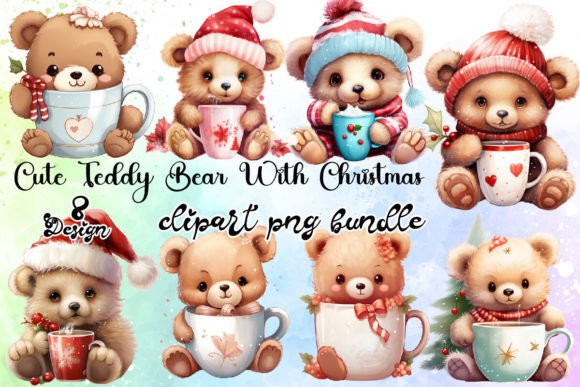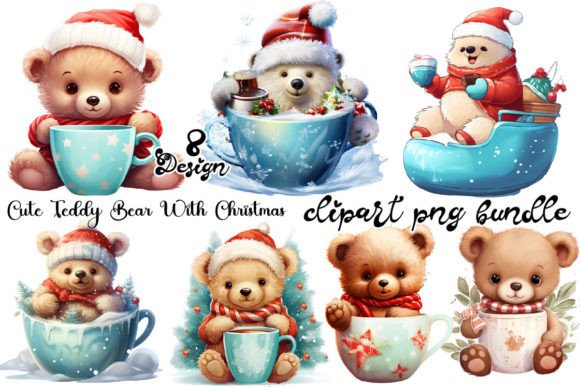
Reviewing the Cute Teddy Bear with Christmas Clipart
As a designer who has spent countless hours digitizing and stitching out thousands of patterns, I have learned that not every digital embroidery file translates well from screen to fabric. When I first pulled up the Cute Teddy Bear with Christmas Clipart, my initial reaction was one of cautious optimism. The illustration style is undeniably charming, evoking that warm, nostalgic feeling we all seek during the holiday season. However, charm alone does not make a viable machine embroidery design. I needed to know if this asset would hold up under the needle, especially when applied to real-world products for my clients and my own craft business.
First Impressions and Visual Personality
The mood of this design is soft, playful, and inviting. It fits squarely into the category of Illustrations that prioritize character over complex shading. For an embroidery project, this is often a blessing. Complex gradients can look muddy when stitched, but bold, clean lines tend to read better on fabric. The teddy bear’s shape is rounded and friendly, which suggests it would work beautifully as a focal point on a personalized gift or a boutique item.
I immediately considered how the layout would interact with different hoop sizes. The composition feels balanced, neither too dense nor too sparse. This is crucial because a design that is too open can look amateurish on a finished product, while one that is too dense can pucker the fabric. The visual personality here leans toward the whimsical, making it an ideal candidate for baby embroidery, children’s apparel, or cozy home decor items like pillow covers.
Real-World Application: The Holiday Tote Test
To truly evaluate the Cute Teddy Bear with Christmas Clipart, I imagined a specific scenario: preparing a custom order for a local boutique owner who sells handmade holiday goods. She wanted a series of canvas tote bag design options for her December collection. This is a common request for Etsy sellers and small shop owners who need reliable design assets that appeal to a broad audience.
In this context, the design performs exceptionally well. The bold outlines of the bear ensure visibility even from a distance, which is essential for retail displays. When stitched onto a natural cotton canvas, the contrast between the thread colors and the fabric texture creates a tactile, high-quality look. I envisioned using a combination of satin stitch for the finer details like the eyes and nose, and a fill stitch for the body of the bear to give it substance. The result would be a sturdy, durable image that withstands the wear and tear of a reusable bag.
Beyond tote bags, this design has strong potential for sweatshirt embroidery. A crewneck sweatshirt in heather gray or deep forest green would provide a perfect backdrop. The softness of the fleece complements the cuddly nature of the teddy bear, enhancing the overall emotional appeal of the finished product. For custom apparel, placing this design on the left chest area creates a subtle yet festive accent, while a larger placement on the back could serve as a statement piece for holiday parties.
Navigating Fabric and Technical Challenges
While the design is versatile, there are areas where caution is necessary. Any experienced embroiderer knows that fabric texture plays a massive role in the final outcome. If you are working with thin or stretchy fabrics, such as jersey knits for t-shirts, you must be meticulous with your stabilizer choice. Without proper support, the weight of the stitches could cause the fabric to distort, ruining the clean lines of the clipart.
Additionally, consider the stitch density. If the original file is optimized for larger hoops, shrinking it down for a small embroidered patch or a cap might cause the stitches to overlap excessively. This can lead to thread breaks or a stiff, cardboard-like feel. I always advise testing the design on scrap fabric first, especially when scaling down. Check how the small details hold up. If the bear’s facial features become indistinguishable at a smaller size, you may need to simplify the design or choose a different application, such as a larger applique design format if available.
Dark fabrics present another challenge. If you are stitching on black or navy, ensure that your thread colors have enough contrast. A dark brown bear on a black shirt will vanish. In such cases, consider adding a white or light-colored underlay or border to make the design pop. This is a simple trick that can save a holiday embroidery project from looking dull.
Commercial Value and Brand Consistency
For commercial embroidery professionals, the value of a design lies not just in its aesthetics, but in its reliability. The Cute Teddy Bear with Christmas Clipart offers a safe, universally appealing option that minimizes the risk of customer dissatisfaction. It is not avant-garde or polarizing; it is comfortably festive. This makes it a strong addition to a portfolio of small shop product offerings.
Using consistent, high-quality designs helps build brand trust. When customers receive a handmade product that looks professional and well-stitched, they are more likely to return. This design supports that goal by providing clear, stitchable lines that reduce the likelihood of errors during production. It also works well in printable mockup previews, allowing you to showcase the design on various products before you even stitch a single thread. This is invaluable for digital product sellers who need to visualize their listings.
Practical Designer Notes for Best Results
Before you commit to a large production run or list this item in your store, keep these practical tips in mind:
- Test on Scrap Fabric: Always stitch out a test sample on the same type of fabric you plan to use for the final product. This allows you to check tension and registration.
- Check Thread Contrast: Verify that your chosen thread colors stand out against the fabric. Use a color wheel if necessary to ensure harmony and visibility.
- Review Stitch Density: If the design feels too stiff after stitching, consider reducing the density in your editing software, if you have the skills and rights to do so.
- Confirm Hoop Size: Ensure the design fits comfortably within your hoop, leaving enough margin for the frame to grip the fabric securely.
- Inspect Small Details: Zoom in on the digital file to see if tiny elements might get lost. If so, consider removing them or enlarging the design.
- Use Proper Stabilizer: Match your stabilizer to the fabric. Cut-away for knits, tear-away for wovens, and wash-away for delicate or sheer materials.
- Verify Licensing: Before selling finished items or using the design in commercial projects, confirm the license terms. Ensure you have the right to use the digital embroidery file for commercial purposes.
In conclusion, the Cute Teddy Bear with Christmas Clipart is a solid choice for designers looking to add a touch of holiday warmth to their repertoire. It bridges the gap between cute illustration and practical embroidery, offering versatility across a range of products from baby clothes to kitchen towels. By paying attention to fabric choice, stabilizer, and stitch quality, you can transform this digital asset into a cherished personalized gift or a best-selling item in your Etsy shop. It is a reminder that good design is not just about what looks good on screen, but what feels good in hand.